
I was talking to a new prospective client recently and asked what doesn’t work for her when she’s watching a nonprofit video.
Her answer was clear. “I hate when irrelevant b-roll or photos are dropped in just to cover an edit. It pulls me right out of the story.”
I completely agree. And if I’m being honest, most filmmakers have been guilty of it at some point.
But here’s the thing – B-roll (those cutaway shots that play over interviews) isn’t there only to cover the story. It’s there to pull you deeper into it.
When it’s done well, it gives the viewer the feeling of being there. They don’t have to take time out of their busy day to see it or work hard in their brains to imagine it. Watching a video with great b-roll shots helps you to experience the story fully.
But that kind of b-roll doesn’t happen by accident. It has to be planned.
Just as you think through interview questions in advance, you need to think through:
- What moments actually matter?
- What actions will help us feel the story?
- Do we have enough time to capture them?
I was on a recent hospital shoot where we were given 15 minutes to film b-roll. I knew it wasn’t enough time. We would end up grabbing whatever we could, and it would be generic and disconnected visually.
So what’s the solution if you don’t have access to strong visuals or the ability to capture them?
Use a second camera angle.
It keeps the viewer grounded in the moment and the emotion, instead of distracting them with something that doesn’t belong.
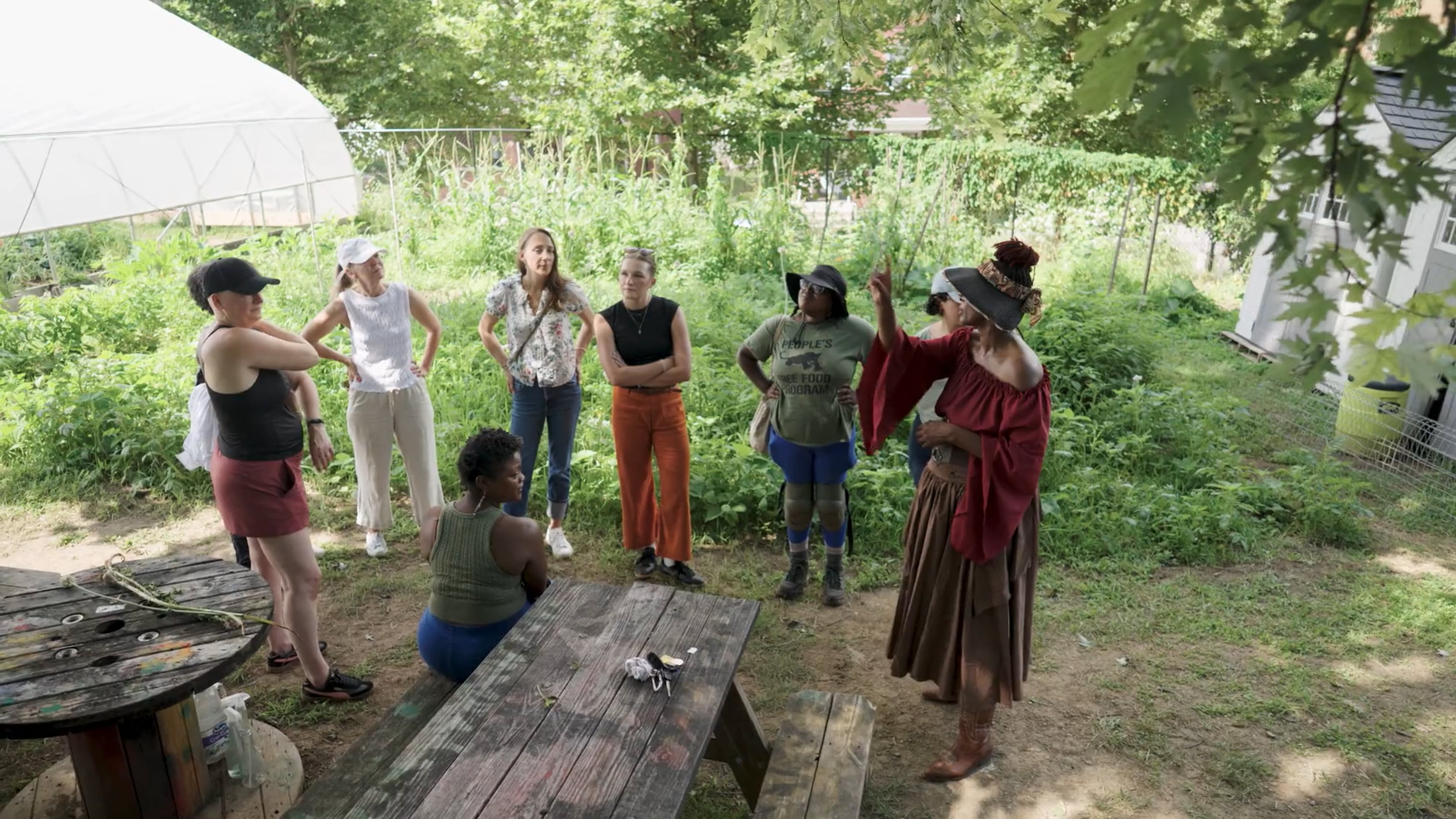
Recently, I had the chance to work with a family foundation that launched its own nonprofit organization, PEALI – the Pittsburgh Eco-Agriculture Leaders Initiative.
This project was a perfect example of what happens when b-roll really works.
We were able to capture:
- Aerial shots of a farm
- People digging in the dirt and picking vegetables
- Close-ups of visitors playing with chickens and goats
- Conversations happening in real time
- Shoppers picking up donated fresh produce
Even a key meeting scene, which we lightly staged, still felt natural and true to the experience. Instead of searching for visuals to fill gaps, the footage itself carried the story.
We used a few photos to include people who couldn’t be there, but for the most part, we stayed rooted in what was actually happening. I believe you can feel the difference.
The simple truth – if you want your audience to feel something, you have to show them something real.
And that starts long before the camera turns on.